

What if the subtle difference between a refined estate and a standard house lies entirely in how you define your window coverings? You likely appreciate that every detail in your Westside home serves a specific purpose, from the hand-applied finishes to the UV-filtering glass. It’s frustrating when design professionals use terms interchangeably, leaving you to guess the difference between drapes vs curtains while worrying about a result that looks less than premium. The 284 sunny days we enjoy in Los Angeles annually can cause visible fading to bespoke furniture in under two years, making this choice about more than just style.
We’ll clarify these essential industry terms so you can select a treatment that reflects your personal standard of luxury. You’ll discover a clear framework for choosing styles based on room function and learn why custom motorization is a necessary investment for high-ceilinged Los Angeles estates. We’re here to help you see the quality of life through the drapery by ensuring your windows are as curated as the rest of your home.
Key Takeaways
- Understand the distinct nuances of drapes vs curtains to determine which aesthetic properly complements the grand architectural scale of your Westside estate.
- Discover how bespoke interlining and curated fabric selections add essential weight and luxury while shielding your home from the intense Southern California sun.
- Learn how high-performance window treatments act as a functional barrier to preserve your hardwood floors and optimize energy efficiency throughout the year.
- Explore why custom-tailored designs and silent motorization are necessary for achieving the seamless “quiet luxury” demanded by modern Los Angeles living.
Defining the Aesthetic: Drapes vs. Curtains in Los Angeles Homes
Homeowners in neighborhoods from Brentwood to the Pacific Palisades often use the terms interchangeably. This common mix-up can lead to design inconsistencies that disrupt the flow of a luxury interior. For those browsing the premier listings of Ray Lyon Realty, understanding the distinction between drapes vs curtains is essential for maintaining a standard of excellence. While both serve to cover windows, their construction, weight, and visual impact cater to very different architectural styles found across the Westside.
In formal Westside estates, drapes serve as an architectural statement. They provide a sense of permanence and grandeur that matches high ceilings and intricate crown molding. Conversely, the breezy, coastal interiors of the South Bay lean toward the casual touch of curtains. These lighter options allow the California sun to filter through, maintaining an airy connection to the outdoors. Since 2022, interior designers have reported a 15% increase in clients requesting specific layering techniques that combine both elements to achieve a sophisticated, multidimensional look.
Custom design plays a vital role in this distinction. Mass-market options often lack the precise hem weights and high-quality linings that define premium treatments. A bespoke approach ensures that the fabric sits perfectly against the floor, creating the tailored silhouette expected in a high-end Los Angeles residence. To find out more about how these tailored elements fit into a broader high-end residential or yacht design project, professional guidance is invaluable for maintaining architectural integrity.
What Defines a Drapery Panel?
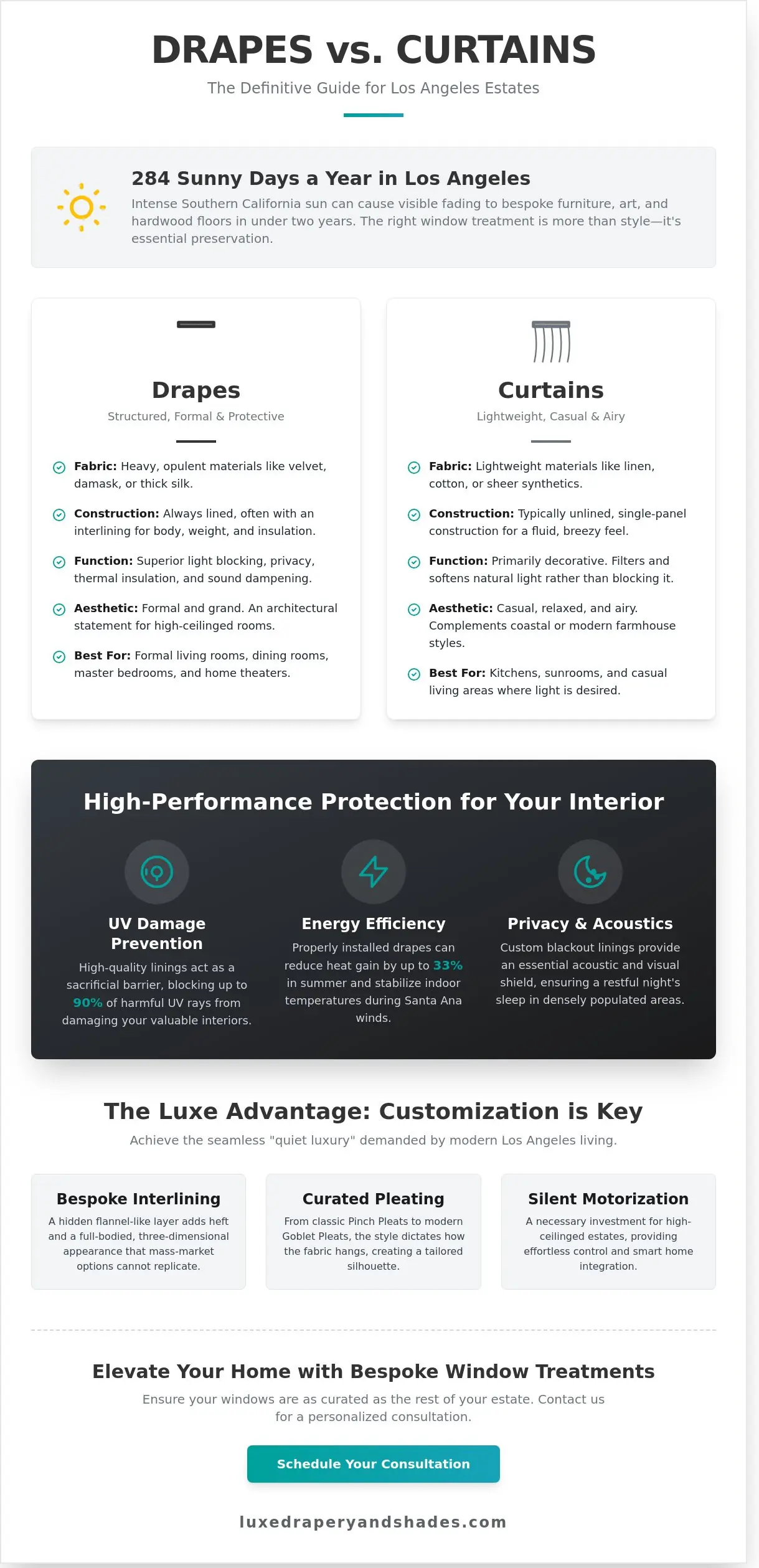
Drapes are the hallmark of refined interior design. They are typically floor-length, fully lined, and crafted from heavier, opulent fabrics like velvet, damask, or thick silk. This construction allows them to hold their shape and provide excellent insulation. They are sold in pairs and frequently feature formal pleating styles, such as the classic pinch pleated drapes or the modern goblet pleat. Drapes are a structured, functional window treatment designed for light blocking and privacy. Their weight requires sturdy, often decorative drapery hardware to support the fabric’s volume.
The Anatomy of a Curtain
Curtains offer a more relaxed and fluid aesthetic. While the general curtain definition covers various types of fabric hangings, in luxury design, they are characterized by their unlined, lightweight nature. Made from sheer linens, cottons, or synthetics, they complement modern farmhouse or coastal styles by softening the light rather than blocking it entirely. Curtains are commonly hung from simple rods or rings, making them easy to swap as seasons change. They lack the rigid structure of drapes, providing a movement that feels natural and unpretentious in sun-drenched rooms.
Choosing the right treatment involves more than just picking a color; it requires an understanding of how light interacts with your specific floor plan. Whether you seek the dramatic weight of drapes or the soft glow of curtains, the goal is to enhance the quality of life through thoughtful design.
Construction and Fabric: The Markers of High-End Drapery
Understanding the structural differences in the drapes vs curtains conversation is the first step toward a refined interior. While curtains are often single-panel and unlined, high-end drapes rely on a multi-layered construction that provides both weight and purpose. This “heft” is achieved through interlining, a specialized flannel-like layer placed between the face fabric and the lining. It gives the treatment a full-bodied, three-dimensional appearance that lighter window coverings simply cannot replicate.
Why Linings Matter for Los Angeles Interiors
Westside homes face unique environmental challenges. The intense afternoon sun in neighborhoods like Brentwood or Santa Monica can quickly degrade delicate silks or linens. High-quality linings act as a sacrificial barrier, protecting expensive face fabrics from 90% of potential UV damage. Beyond preservation, these layers serve a functional role during seasonal shifts. Homeowners often weigh the benefits of drapes vs curtains when seeking to balance style with thermal performance. Data from the U.S. Department of Energy suggests that energy-efficient window coverings can reduce heat gain by as much as 33% during the warmest months. During Santa Ana wind events, thermal linings help stabilize indoor temperatures, keeping your living room comfortable. For residents in densely populated areas like West Hollywood, blackout linings provide a necessary acoustic and visual shield, ensuring a restful night’s sleep.
Bespoke Pleating Styles
The way a fabric hangs is dictated by its pleat style, which is where the artistry of custom work becomes visible. Different pleats serve different architectural needs:
- Pinch Pleats: These remain the gold standard for traditional estates in Hancock Park. Custom pinch pleated drapes in Los Angeles use approximately 2.5 times the fabric width to create a structured, timeless silhouette.
- Ripple Fold: This style is the preferred choice for the floor-to-ceiling glass walls found in Hollywood Hills moderns. It creates a soft, consistent wave pattern that slides effortlessly on a track.
- Inverted Box Pleats: These offer a flat, tailored header that suits formal dining rooms where a clean, architectural line is desired over ornate detailing.
Choosing between natural linen and heavy-duty blackout fabrics depends on your light control needs. Linen offers a relaxed, coastal aesthetic perfect for Pacific Palisades, while heavier velvets provide the drama required for a dedicated home theater. The final touch is the hardware. Whether you select a motorized track for convenience or a hand-finished brass rod, selecting the right luxury drapery hardware in Los Angeles defines the installation’s character. You can view our curated collections to see how these elements harmonize in real-world Los Angeles homes.
Performance and Protection: Managing the Southern California Sun
Living on the Westside means embracing the light, but the relentless Southern California sun can be unforgiving. Choosing between drapes vs curtains isn’t just about style; it’s about preserving your home’s interior. While curtains offer a light, airy aesthetic, they often lack the density needed to shield your furniture from the high UV index found in coastal Los Angeles. Custom drapes, typically constructed with high-quality linings, provide a robust barrier that prevents expensive white oak or walnut hardwood floors from fading over time.
UV Mitigation and Heat Control
Drapes serve as an essential thermal barrier against the harsh afternoon sun in neighborhoods like the South Bay or Brentwood. Data from the Department of Energy shows that medium-colored draperies with white-plastic backings can reduce heat gain by up to 33% when they’re closed during the hottest parts of the day. This reduction significantly lowers the strain on your AC system during a September heatwave. For the ultimate balance of utility and style, many homeowners opt for a curated, layered look. This involves pairing delicate sheer curtains for filtered morning light with heavy, lined drapes that you can draw shut when the sun hits its peak.
Privacy Solutions for Urban Living
Urban living in Los Angeles often places homes in close proximity to high-traffic corridors and neighboring properties. Achieving seclusion without turning your living room into a dark cave is a common design challenge. Sheer curtains provide a sophisticated solution for daytime privacy. They obscure the view from the street while allowing soft, natural light to permeate the space. The debate over drapes vs curtains often centers on aesthetics, but the functional benefits are the true luxury. As evening falls and interior lights make your home visible to passersby, the security of heavy drapes becomes indispensable. These thicker fabrics ensure complete privacy during the night, creating a sanctuary away from the city’s hustle.
Beyond light and heat, sound control is a vital consideration for homes near busy LA streets like Wilshire or Santa Monica Boulevard. Heavy, pleated drapes act as acoustic buffers. The dense fibers and deep folds absorb sound waves, noticeably dampening the hum of traffic from nearby corridors. This creates a quieter, more tranquil atmosphere that enhances your overall quality of life and turns a busy urban residence into a peaceful retreat.
Room-by-Room Selection for Westside and South Bay Estates
Selecting the right window treatment depends entirely on the rhythm of each room. In high-end Los Angeles residences, the choice of drapes vs curtains isn’t just about fabric; it’s about engineering the perfect environment for both leisure and utility. Every square foot of a Westside estate serves a purpose, and the window coverings must reflect that specific function. The nuances of drapes vs curtains become most apparent when comparing a breezy kitchen to a dedicated media room.
The Formal Living Area
Grand living spaces in the Hollywood Hills or overlooking the Pacific require a sense of scale. Floor-to-ceiling custom drapes provide the architectural weight necessary to frame these expansive views. They serve a vital purpose by softening the sharp, glass-heavy lines of contemporary architecture common in West LA. For a seamless experience, many homeowners coordinate these luxe fabrics with existing custom interior shading to manage glare without sacrificing the aesthetic. Data from the Department of Energy indicates that medium-colored draperies with white plastic backings can reduce heat gains by 33%, keeping these sun-drenched rooms comfortable during the hottest afternoon peaks.
Coastal Bedrooms and Guest Suites
Your bedroom should feel like a sanctuary. In the South Bay, the focus shifts to creating a relaxed, tactile atmosphere. We often suggest layering soft, sheer curtains with heavy blackout drapes. This combination provides the flexibility to enjoy filtered morning light while ensuring total darkness for restorative sleep. Quality sleep is essential in a city that never stops. Thick, high-quality drapery can also dampen external noise by several decibels, shielding your rest from the sounds of the city. Choose natural linens and textured weaves that mirror the effortless elegance of coastal living.
Functional spaces like kitchens and sunlit nooks demand a different strategy. Lightweight curtains are the practical choice here. They’re easier to clean and don’t overwhelm the smaller windows often found above sinks or breakfast banquettes. They provide privacy while still allowing a coastal breeze to flow through the home. Conversely, home theaters require specialized, heavy-duty solutions. Achieving 100% light exclusion is the goal for a true cinematic experience. Specialized drapery with light-blocking liners and side channels eliminates leaks, ensuring your screen remains crisp regardless of the time of day. This level of light control is a hallmark of a truly custom home design.
Elevate your home’s atmosphere with a personalized design consultation. Discover how Luxe Drapery and Shades can transform your space.
The Luxe Advantage: Custom Design and Smart Integration in LA
While big-box retailers offer convenience, their “ready-made” products rarely account for the architectural ambition of a Westside estate. Standard 84-inch or 96-inch panels fail when faced with the soaring 12-foot ceilings common in Pacific Palisades or Santa Monica. The debate of drapes vs curtains often settles on custom solutions because mass-produced fabrics lack the weight and memory to hold a crisp, consistent pleat. Luxury homes require a specific drop that kisses the floor with mathematical precision. This level of detail is only achievable through bespoke tailoring that considers the unique headers and hardware required for oversized windows.
Professional installation is the final, essential step in the luxury experience. A master installer ensures that heavy, floor-to-ceiling panels are anchored securely and glide without resistance. This attention to detail prevents the sagging or uneven hems that often plague DIY projects. In a city where design is a primary form of expression, your window treatments should reflect the same intentionality as your architecture.
Motorization and Lutron Control
Modern living in Los Angeles demands effortless control. Integrating Lutron lighting control with your window treatments allows you to synchronize your entire environment. You can schedule your drapes to open at sunrise or close automatically as the afternoon sun hits a specific angle. This protects your fine art and hardwood floors from UV damage without you ever lifting a finger.
Motorization does more than provide ease; it preserves your investment. By removing the need for physical handling, you eliminate the transfer of oils and dirt from hands to delicate silks or linens. This can extend the aesthetic life of your fabric by 30% or more. Whether you prefer a wall-mounted keypad, a smartphone app, or a simple voice command, smart integration transforms your home into a responsive sanctuary. For a comprehensive overview of selecting and installing architectural-grade systems, our guide to motorized drapery hardware in Los Angeles walks you through how whisper-quiet mechanisms can move even the heaviest interlined velvets with silent precision.
Your Los Angeles Design Partner
Luxe Drapery and Shades operates as a boutique consultancy for homeowners who value craftsmanship over mass-market solutions. We understand the specific light conditions and aesthetic preferences of residents in the South Bay and Torrance. Our process is collaborative and thorough, moving from an initial conceptual phase to a detailed technical measurement of your space. We help you navigate the nuances of drapes vs curtains to find the texture and opacity that best suits your lifestyle.
Our team manages every aspect of the project, ensuring a seamless transition from the design board to your living room. We take pride in creating atmospheres that feel both curated and comfortable. If you are ready to elevate your interior, schedule your in-home design consultation in Los Angeles today and see the quality of life through the drapery.
Elevate Your Home with Intentional Design
Selecting the right window treatments is about more than just fabric; it’s about how you experience your home’s atmosphere. Whether you’re prioritizing the thermal protection of heavy-lined drapes for a Westside estate or the breezy light filtration of sheer curtains in a South Bay sunroom, the choice defines your daily comfort. Understanding the nuances of drapes vs curtains allows you to balance aesthetic sophistication with functional performance against the intense Southern California sun. Since 2020, Luxe Drapery and Shades has specialized in these precise details for high-end Los Angeles properties.
Our team brings technical mastery to every installation. As a licensed and bonded California contractor (CSLB #1066068) and expert Lutron certified installers, we ensure your window treatments integrate perfectly with modern smart home systems. We don’t just hang fabric; we curate a lifestyle that values craftsmanship and individual style. It’s time to refine your space with a partner who understands the high standards of Los Angeles living. We look forward to helping you create a sanctuary that feels as beautiful as it looks.
See the Quality of Life Through the Drapery: Book Your Consultation
Frequently Asked Questions
Is it better to have drapes or curtains in a living room?
Choosing between drapes vs curtains for your living room depends on your desired atmosphere and functional needs. Drapes provide a formal, tailored look with heavier fabrics that offer superior light control and privacy. A 2023 Houzz interior design study found that 65% of luxury homeowners prefer drapes in main living areas to achieve better acoustic dampening and a more curated aesthetic. This choice transforms a standard room into a sophisticated sanctuary.
Should drapes touch the floor in a modern LA home?
Drapes should graze the floor or puddle slightly to maintain a high-end, professional appearance. Most designers in Westside zip codes like 90210 and 90401 specify a 1/4 inch floor clearance for a crisp, modern look. If you prefer a more romantic and opulent feel, a 2 inch puddle adds a sense of effortless luxury. This precision ensures your window treatments look intentional rather than unfinished.
Can you mix curtains and drapes on the same window?
You can certainly mix both to create a sophisticated, multi-functional window display that handles the varying LA light. Placing a sheer curtain behind a heavy drapery panel allows you to manage privacy throughout the day while maintaining a view. The U.S. Department of Energy reports that this layering technique can reduce heat gain by 33%. It’s a practical way to balance the drapes vs curtains debate while maximizing your home’s thermal comfort.
Do drapes help with insulation during Los Angeles heatwaves?
Lined drapes are exceptionally effective at insulating your home against the intense Southern California sun. During peak summer months, medium-colored drapes with white-plastic backings can reduce solar heat gains by roughly 33%. This thermal barrier keeps your interiors cool and protects your fine furniture from UV damage. It’s a vital investment for maintaining a temperate and inviting home environment during record-breaking heatwaves.
What is the most popular drapery style in Los Angeles right now?
The ripple fold style is currently the most requested drapery design across Westside Los Angeles homes. This modern look features soft, continuous S-curve waves that appear uniform from both inside and outside the property. In our 2024 project portfolio, ripple fold installations represent 55% of all custom orders. Its clean lines perfectly complement the minimalist architecture found in many contemporary Santa Monica and Brentwood residences.
How do I choose between custom drapes and store-bought curtains?
Custom drapes are the superior choice for homeowners who value precision, quality, and unique design. Store-bought options often come in limited lengths, but custom treatments are tailored to your exact ceiling height for a perfect fit. A standard retail store might offer 12 fabric options, but a professional studio provides access to over 1,000 premium textiles. This ensures your window treatments are a perfect reflection of your personal style.
Are motorized drapes worth it for a smart home?
Motorized drapes are a valuable addition to any modern smart home for both convenience and energy efficiency. Automated systems allow you to sync your window treatments with the sun’s movement, protecting your home even when you’re away. According to industry data from Lutron, smart shading can improve overall HVAC efficiency by 15%. They offer a seamless blend of technology and refined living that standard manual tracks simply can’t match. Homeowners looking to take the next step can explore our detailed breakdown of motorized drapery hardware options for Los Angeles luxury homes to understand how to integrate these systems with existing smart home hubs.
What fabric is best for drapes in a sunny environment?
Linen blends paired with high-performance UV linings are the best choice for the high solar exposure in Los Angeles. While 100% natural silk or linen may degrade or fade within 24 months, synthetic blends offer significantly higher colorfastness. We recommend fabrics with a high double-rub count and specialized light-filtering backings. These materials ensure your investment remains vibrant and beautiful despite the constant Westside sunshine.